

Do perimenopause supplements work? What UK women should know.
No food supplement in the UK has an authorised claim to relieve perimenopause or menopause symptoms such as hot flushes, poor sleep, low mood or brain fog. The NHS and NICE point to HRT as the main treatment, with CBT as an option for some symptoms. Start with a GP; a supplement is not a substitute for that.
What helps perimenopause symptoms, according to the NHS?
HRT first, then other medicines, talking therapy and lifestyle changes. The NHS advises anyone with symptoms to talk to a doctor, nurse or pharmacist about HRT and other options.
NICE, which sets guidance for the NHS, recommends offering HRT for hot flushes and night sweats. It says menopause-specific CBT (cognitive behavioural therapy) can be considered for hot flushes and the sleep problems and low mood that come with them, alongside HRT or instead of it.
If HRT is not right for you, the NHS lists other medicines. Its lifestyle steps include regular sleep, a balanced diet, calcium-rich food, weight-bearing exercise, not smoking and keeping within alcohol limits. Contact your GP if you are bleeding more than before, or bleed after 12 months without a period.
Do herbal remedies like black cohosh and red clover work?
The evidence is weak. The NHS says there is very little evidence on how well red clover and black cohosh work or how safe they are, and that some herbal remedies, especially St John's wort, may cause serious side effects with other medicines.
NICE tells doctors to explain that black cohosh and isoflavone products vary, their safety is uncertain and interactions with other medicines have been reported.
None of these herbs has an authorised health claim in Great Britain, and no claim is authorised for menopause, hormone balance or hot flushes.
What supplements should you take during perimenopause?
Vitamin D is the main one. The NHS says everyone should consider a daily 10 microgram supplement in autumn and winter, and it lists vitamin D supplements among the ways to protect against weak bones.
Iron is worth asking about. The NHS says women with heavy periods are at higher risk of iron deficiency anaemia and may need iron supplements, so if your periods have become heavier, ask your GP about a blood test. Calcium is best from food: the NHS says adults need 700mg a day and should be able to get it from a varied diet.
Anything more is a personal choice, not a treatment. For what labels may say, read menopause supplements in the UK: what is authorised.
Which nutrient claims are relevant to women at this stage?
None of the claims below is about menopause symptoms. They describe each nutrient's normal role, apply only at 15% of the NRV or more, and cover things many women care about at this stage: tiredness, mental performance and bones. Amounts are for one VH Life sachet.
| Nutrient | Amount per sachet (%NRV) | Authorised claim, exact wording |
|---|---|---|
| Vitamin B6 | 1.4mg (100%) | Vitamin B6 contributes to the regulation of hormonal activity. |
| Vitamin B6 | 1.4mg (100%) | Vitamin B6 contributes to the reduction of tiredness and fatigue. |
| Magnesium | 65mg (17.3%) | Magnesium contributes to a reduction of tiredness and fatigue. |
| Pantothenic acid | 12mg (200%) | Pantothenic acid contributes to normal mental performance. |
| Vitamin K | 30µg (40%) | Vitamin K contributes to the maintenance of normal bones. |
| Calcium | 164mg (20.5%) | Calcium is needed for the maintenance of normal bones. |
| Magnesium | 65mg (17.3%) | Magnesium contributes to the maintenance of normal bones. |
| Manganese | 3mg (150%) | Manganese contributes to the maintenance of normal bones. |
| Zinc | 15mg (150%) | Zinc contributes to the maintenance of normal bones. |
Three notes. Vitamin D: 62.5µg is well above the NHS everyday suggestion of 10µg and under the NHS advice not to take more than 100µg a day. If you already take a vitamin D supplement, add up the total.
Vitamin K: if you take anticoagulant or antiplatelet medicines, ask your doctor before using any product that contains it. Calcium: 164mg is a small part of the NHS 700mg adult figure, so calcium-rich food still matters.
Is brain fog a symptom of menopause?
Yes. The NHS lists problems with memory or concentration among the symptoms, and says they can feel worse with poor sleep. No supplement has an authorised claim for brain fog.
The nearest lawful wording is about normal function, not symptom relief. A VH Life sachet provides 12mg of pantothenic acid (200% NRV). Pantothenic acid contributes to normal mental performance. It also provides 15mg of zinc (150% NRV). Zinc contributes to normal cognitive function. Our brain fog guide covers the other causes a GP can check.
Where does VH Life fit?
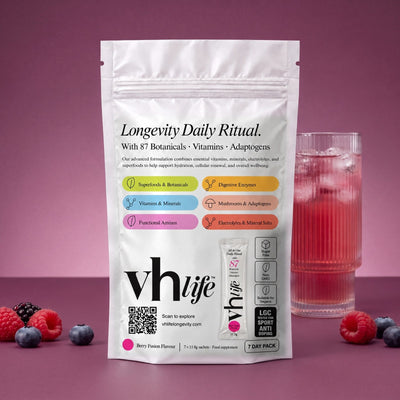
VH Life is not a menopause product. It is a once-a-day all-in-one sachet: 26 vitamins and minerals with declared amounts, plus named botanicals, adaptogens, mushrooms, greens, amino acids, enzymes and live cultures without individual amounts. No authorised claim exists for those, so we make none. If you take HRT or other medicines, show the ingredient list to your GP or pharmacist first.
It contains no iron, so it will not meet an iron need a GP has found. It has no omega-3, no protein and no collagen, and it is not a substitute for HRT or medical advice. Vitamin A is 900µg a sachet; the NHS advises women past the menopause to keep vitamin A from food and supplements to 1.5mg a day or less.
On subscription VH Life is £49.99 for 28 sachets every 4 weeks, which works out at £1.79 a day. There is also a 7-day trial (7 sachets, £12.99, one per customer) and one box of 14 sachets for £34.99, with free UK delivery. See the full label on the VH Life Berry product page.
Questions people also ask
What supplements should I take if I am perimenopausal?
The NHS advises everyone to consider 10µg of vitamin D a day in autumn and winter. If your periods are heavy, ask a GP about iron. No supplement has an authorised claim for perimenopause symptoms, and HRT is the main treatment the NHS and NICE describe.
Can I take supplements with HRT?
Check with your GP or pharmacist first, especially for herbal products. The NHS warns that some herbal remedies, St John's wort in particular, can cause serious side effects with other medicines. Take the full ingredient list with you.
Is there an all in one supplement for perimenopause?
No authorised claim exists for relieving perimenopause symptoms. An all-in-one can provide vitamins and minerals with authorised claims about normal function, not symptoms. A VH Life sachet provides 1.4mg of vitamin B6 (100% NRV). Vitamin B6 contributes to the regulation of hormonal activity.
Can perimenopause cause fatigue?
It can. The NHS lists sleep problems among the symptoms and says mood and memory problems can feel worse when you are very tired. Low iron is another cause a GP can check. Our guide to why you might always be tired covers the other causes.
What about magnesium for perimenopause sleep?
No authorised claim exists for magnesium and sleep, so we make none. A different, authorised claim does exist. Magnesium contributes to a reduction of tiredness and fatigue. For sleep problems linked to night sweats, NICE says menopause-specific CBT can be considered.
Sources
- NHS: Menopause and perimenopause, accessed 21 October 2026.
- NHS: Symptoms of menopause and perimenopause, accessed 21 October 2026.
- NHS: Treatment for menopause and perimenopause, accessed 21 October 2026.
- NHS: Things you can do to help menopause and perimenopause symptoms, accessed 21 October 2026.
- NHS: Herbal remedies and complementary medicines for menopause symptoms, accessed 21 October 2026.
- NICE: Menopause: identification and management (NG23), recommendations, accessed 21 October 2026.
- NHS: Vitamin D, accessed 21 October 2026.
- NHS: Iron, accessed 21 October 2026.
- NHS: Calcium, accessed 21 October 2026.
- NHS: Vitamin A, accessed 21 October 2026.
- GOV.UK: Great Britain nutrition and health claims (NHC) register, accessed 21 October 2026.
Food supplements should not be used as a substitute for a varied and balanced diet and a healthy lifestyle. One sachet a day. Not suitable for children, adolescents, or pregnant or breastfeeding women. If you take anticoagulant or antiplatelet medicines, ask your doctor before use. VH Life is a food supplement, not a medicine. If symptoms persist, see your GP or pharmacist.