

Why do I keep getting colds, and how do I get over one faster?
Colds are caused by viruses that spread easily, so catching a few a year is normal: NICE says adults average 2 to 3 colds a year, and more if they spend time with children. To get over one, the NHS advises rest, plenty of fluids and pharmacy remedies. Antibiotics do not help.
Why do I keep getting colds?
Mostly because cold viruses are everywhere and easy to catch. NICE's clinical summary says adults have an average of 2 to 3 colds a year and children 5 to 8, and adults who are in regular contact with children tend to get more.
The NHS says germs from coughs and sneezes can live on hands and surfaces for 24 hours, and people can pass a cold on from a few days before their symptoms start until they finish.
A single cold can also take 1 to 2 weeks to clear, so one can seem to run into the next. Flu has similar symptoms but comes on within hours and usually leaves you too unwell to carry on as normal.
How can I stop catching so many colds?
Hand-washing matters most. The NHS lists these ways to avoid catching a cold:
- washing your hands often with warm water and soap, for about 20 seconds
- not sharing towels or household items such as cups with someone who has a cold
- not touching your eyes or nose, in case you have picked up the virus
- staying fit and healthy
If you have a cold, use tissues and bin them straight away. The NHS also says not to smoke, as it can make symptoms worse.
Sleep is not on the NHS list for avoiding colds, but rest is the first thing it advises once you have one. If you are tired even between colds, read why you might always feel tired.
How do I get over a cold faster?
You cannot cure a cold, but you can ease it while it runs its course. The NHS advice is:
- get plenty of rest
- drink lots of fluid, such as water, to avoid dehydration
- eat healthy food
- gargle salt water or try a hot lemon and honey drink for a sore throat
- breathe in steam to ease a blocked nose, for example in a bathroom with a hot shower running
A pharmacist can recommend paracetamol or ibuprofen for aches and a high temperature, and decongestants for a blocked nose. Do not use decongestant nasal sprays for more than a week. Do not take other cough and cold medicines alongside paracetamol or ibuprofen tablets as you may take more medicine than you should.
Do antibiotics, vitamin C or zinc help a cold?
Antibiotics do not. The NHS says colds are caused by viruses, and antibiotics only work on bacterial infections.
On supplements, the NHS says there is little evidence that supplements such as vitamin C, echinacea or garlic prevent colds or help you get better more quickly. In Great Britain, no supplement or nutrient is authorised to claim that it prevents colds, shortens them or treats them. That includes vitamin C and zinc.
If you do take vitamin C or zinc while ill, watch the totals. The NHS says taking more than 1,000mg of vitamin C a day can cause stomach pain and diarrhoea, and that you should not take more than 25mg of zinc supplements a day unless a doctor advises it.
When should I see a GP about a cold?
Most colds do not need a GP. The NHS says get help if:
- you have a high temperature for more than 3 days, or it is very high
- your symptoms get worse, or do not get better after 10 days
- you feel short of breath or have chest pain
- you have a cough for more than 3 weeks
- you have a long-term condition, such as diabetes or a heart, lung or kidney condition
- you have a weakened immune system, for example because of chemotherapy
Where does VH Life fit?
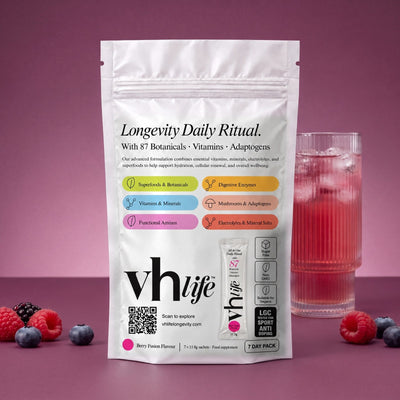
VH Life is not a cold remedy. It will not prevent a cold, shorten one or treat one, and no supplement may lawfully claim to. What it provides is a daily intake of nutrients that carry the authorised GB claim for the immune system:
| Nutrient | Per sachet | %NRV | Authorised claim |
|---|---|---|---|
| Vitamin C | 900mg | 1,125% | Vitamin C contributes to the normal function of the immune system |
| Zinc | 15mg | 150% | Zinc contributes to the normal function of the immune system |
| Selenium | 70µg | 127% | Selenium contributes to the normal function of the immune system |
| Vitamin A | 900µg | 112.5% | Vitamin A contributes to the normal function of the immune system |
| Vitamin B6 | 1.4mg | 100% | Vitamin B6 contributes to the normal function of the immune system |
| Vitamin B12 | 250µg | Well above 15% of the NRV | Vitamin B12 contributes to the normal function of the immune system |
| Folate | 400µg | 200% | Folate contributes to the normal function of the immune system |
| Copper | 1mg | 100% | Copper contributes to the normal function of the immune system |
The 62.5µg is above the 10µg the NHS suggests in autumn and winter and under its 100µg adult upper limit, so if you already take vitamin D, add up the total. Our UK vitamin D guide explains the numbers.
Its botanicals and mushrooms have no authorised health claim, so we make none. For more on each nutrient, see which vitamins and minerals have an authorised immune claim.
On subscription VH Life is £49.99 for 28 sachets every 4 weeks, which works out at £1.79 a day. There is also a 7-day trial (7 sachets, £12.99, one per customer) and one box of 14 sachets for £34.99. Free UK delivery. See the VH Life sachet's full label and plans.
Questions people also ask
Can zinc help a cold?
No zinc product is authorised in Great Britain to claim it prevents, shortens or treats a cold. The authorised claim is general: Zinc contributes to the normal function of the immune system. If you take zinc lozenges, the NHS says do not take more than 25mg of zinc supplements a day unless a doctor advises it.
Is vitamin C good for colds?
The NHS says there is little evidence that supplements such as vitamin C prevent colds or help you get better more quickly. Rest, fluids and pharmacy remedies are its advice. Taking more than 1,000mg of vitamin C a day can cause stomach pain and diarrhoea, so count every source.
Why do I keep getting colds every month?
Frequent colds are common if you are around children or lots of people, and one cold can last up to 2 weeks, so they can seem continuous. See a GP if a cold does not improve after 10 days, a cough lasts more than 3 weeks, or you have a long-term condition.
How long is a cold contagious?
The NHS says you are infectious from a few days before your symptoms start until they have all gone, which usually takes 1 to 2 weeks. Washing your hands, using tissues and binning them straight away reduces the risk of passing it on.
Should I go to work with a cold?
If you feel well enough and have no high temperature, most people carry on as normal. The NHS says if you have a high temperature or do not feel well enough to do your normal activities, try to stay at home and avoid contact with other people until you feel better.
Does VH Life stop colds?
No, and no supplement may lawfully claim to prevent or shorten a cold. A sachet provides nutrients with authorised immune claims, for example: Selenium contributes to the normal function of the immune system. For colds themselves, follow the NHS advice on rest, fluids, hand-washing and pharmacy remedies.
Sources
- NHS: Common cold, accessed 21 October 2026.
- NICE Clinical Knowledge Summaries: Common cold, prevalence, accessed 21 October 2026.
- NHS: How to wash your hands, accessed 21 October 2026.
- NHS: Vitamin C, accessed 21 October 2026.
- NHS: Other vitamins and minerals (zinc), accessed 21 October 2026.
- NHS: Vitamin D, accessed 21 October 2026.
- GOV.UK: Great Britain nutrition and health claims (NHC) register, accessed 21 October 2026.
One sachet a day. Food supplements should not be used as a substitute for a varied and balanced diet and a healthy lifestyle. Not suitable for children, adolescents, or pregnant or breastfeeding women. VH Life is a food supplement, not a medicine. If symptoms persist, see your GP or pharmacist.