

What should men over 40 look for in a multivitamin?
Start with the NHS basics: consider 10µg of vitamin D in autumn and winter, eat a varied diet, keep alcohol to 14 units a week or less, and take the free NHS Health Check offered from 40. Then look for declared amounts at or above 15% NRV, totals within NHS limits, and no added iron unless a GP advises it.
Do men over 40 need a multivitamin?
Not necessarily. The NHS says most people should get all the nutrients they need from a varied and balanced diet, although some people may need extra supplements.
Vitamin D is the exception. Between October and early March the UK sun is too weak to make enough, so the NHS advises everyone to consider a daily 10 microgram supplement in autumn and winter. A multivitamin with at least that much is one way; plain vitamin D is another. Our page do I need a multivitamin? goes further.
What health checks should men get from 40?
The NHS Health Check. It is free for people aged 40 to 74 without certain existing conditions, and your GP or local council should invite you every 5 years. If you have not been invited, contact your GP practice.
It takes about 20 to 30 minutes and usually includes your weight and waist, a blood pressure test and a cholesterol test. You are asked about smoking, alcohol and activity, and given your 10-year risk of problems such as heart disease, stroke and type 2 diabetes.
Two more NHS basics:
- Alcohol: men and women are advised not to drink more than 14 units a week on a regular basis, spread over 3 or more days.
- Activity: at least 150 minutes of moderate activity or 75 minutes of vigorous activity a week, plus strengthening activities on at least 2 days.
What do men's multivitamins usually add?
Many focus on zinc, selenium, the B vitamins and vitamin D, and some add herbs such as ginseng or saw palmetto. No authorised health claim exists in Great Britain for those herbs.
Iron is the one to check. The NHS says men aged 19 and over need 8.7mg of iron a day and that you should be able to get all the iron you need from your daily diet. Unless a GP says you are low, a formula without iron is reasonable.
No authorised claim exists for libido, sexual performance, prostate health, building muscle or raising testosterone. If you are worried about any of those, see a GP.
Which nutrient claims are relevant to men?
These are authorised GB claims men often ask about, with the amount in one VH Life sachet, each above the 15% NRV level needed. The testosterone claim is about maintaining normal levels in the blood. It is not a claim to raise them.
| Nutrient | Amount per sachet (%NRV) | Authorised claim, exact wording |
|---|---|---|
| Zinc | 15mg (150%) | Zinc contributes to the maintenance of normal testosterone levels in the blood. |
| Zinc | 15mg (150%) | Zinc contributes to normal fertility and reproduction. |
| Selenium | 70µg (127%) | Selenium contributes to normal spermatogenesis. |
| Potassium | 470mg (23.5%) | Potassium contributes to the maintenance of normal blood pressure. |
| Thiamin (vitamin B1) | 1.1mg (100%) | Thiamine contributes to the normal function of the heart. |
| Magnesium | 65mg (17.3%) | Magnesium contributes to normal muscle function. |
| Magnesium | 65mg (17.3%) | Magnesium contributes to a reduction of tiredness and fatigue. |
| Vitamin B12 | 250µg (well above 15% of the NRV) | Vitamin B12 contributes to the reduction of tiredness and fatigue. |
| Pantothenic acid | 12mg (200%) | Pantothenic acid contributes to the reduction of tiredness and fatigue. |
If tiredness is why you are looking, read why am I always tired? first.
How much is too much?
More is not better, and stacking products is an easy way to overshoot. The NHS figures:
- Zinc: men need about 9.5mg a day. Do not take more than 25mg a day from supplements unless a doctor advises it. VH Life gives 15mg.
- Selenium: men need 75µg a day. Taking 350µg or less a day from supplements is unlikely to cause harm. VH Life gives 70µg.
- Vitamin A: older men, who are more at risk of osteoporosis, should avoid more than 1.5mg a day from food and supplements, and anyone who eats liver every week should not take supplements containing vitamin A. VH Life gives 900µg.
- Vitamin D: do not take more than 100µg a day. VH Life gives 62.5µg, which is well above the NHS everyday suggestion of 10µg. If you already take vitamin D, add up the total.
Where does VH Life fit?
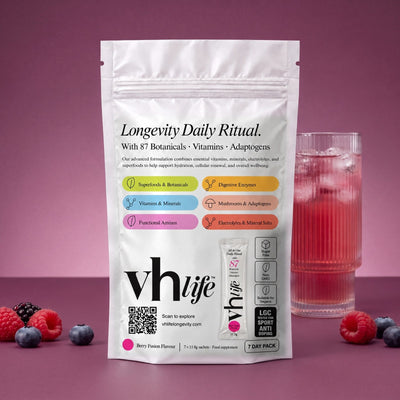
VH Life is an all-in-one sachet, not a men's formula: the same 11.8g berry sachet for everyone, once a day in 250 to 500ml of cold water, with 26 vitamins and minerals at declared amounts plus named botanicals, adaptogens, mushrooms, greens, amino acids, enzymes and live cultures without individual amounts. No authorised claim exists for those, so we make none.
It suits a man who wants one drink instead of a multivitamin, a zinc and a magnesium. It contains no iron, no protein and no added caffeine, and it is not a meal replacement or a sports drink. It does not suit you if you want the cheapest multivitamin.
On subscription VH Life is £49.99 for 28 sachets every 4 weeks, which works out at £1.79 a day. There is also a 7-day trial (7 sachets, £12.99, one per customer) and one box of 14 sachets for £34.99, with free UK delivery. See the label on the VH Life Berry product page, or compare it with other options in the best all-in-one supplement UK guide.
Questions people also ask
Is zinc good for you?
Zinc is an essential mineral. The NHS says men need about 9.5mg a day and should be able to get it from a varied diet. Zinc contributes to the normal function of the immune system. High doses reduce how much copper you absorb, so do not take more than 25mg a day from supplements unless a doctor advises it.
How can men increase testosterone naturally?
No authorised claim exists for raising testosterone. The authorised wording is about keeping levels normal. Zinc contributes to the maintenance of normal testosterone levels in the blood. If you have symptoms that worry you, see a GP, who can decide whether a blood test is needed.
Is a multivitamin enough vitamin D?
Check the label. The NHS suggests 10µg a day in autumn and winter for everyone, and all year for some groups. If your multivitamin gives at least 10µg, you may not need a separate vitamin D. Do not take more than 100µg a day in total. Our vitamin D guide has more.
Why am I always tired as a man?
The NHS lists poor sleep, an unhealthy diet, little exercise, stress and depression as common causes, and conditions such as sleep apnoea, diabetes and iron deficiency anaemia among others. See a GP if you have felt tired for a few weeks without knowing why. A supplement is not a fix for an unexplained cause.
What is the best multivitamin for men in the UK?
There is no single best one. Look for declared amounts at or above 15% NRV, at least 10µg of vitamin D, no herbal promises without an authorised claim behind them, totals within NHS limits, and a price per serving you can keep paying. Our cost per day guide helps compare.
Sources
- NHS: Vitamins and minerals, accessed 21 October 2026.
- NHS: Vitamin D, accessed 21 October 2026.
- NHS: NHS Health Check, accessed 21 October 2026.
- NHS: The risks of drinking too much, accessed 21 October 2026.
- NHS: Physical activity guidelines for adults aged 19 to 64, accessed 21 October 2026.
- NHS: Tiredness and fatigue, accessed 21 October 2026.
- NHS: Iron, accessed 21 October 2026.
- NHS: Others (zinc, selenium and other minerals), accessed 21 October 2026.
- NHS: Vitamin A, accessed 21 October 2026.
- GOV.UK: Great Britain nutrition and health claims (NHC) register, accessed 21 October 2026.
Food supplements should not be used as a substitute for a varied and balanced diet and a healthy lifestyle. One sachet a day. Not suitable for children, adolescents, or pregnant or breastfeeding women. VH Life is a food supplement, not a medicine. If symptoms persist, see your GP or pharmacist.