

Do I need a multivitamin if I eat healthily?
Probably not, if you genuinely eat a varied, balanced diet. The NHS says most people can get the vitamins and minerals they need from food. The main exceptions are vitamin D in autumn and winter for everyone, folic acid when trying for a baby, vitamin B12 for vegans, and anything a GP has found you are low in.
Does the NHS recommend a multivitamin?
No, not for everyone. The NHS says most people should get all the nutrients they need from a varied and balanced diet, although some people may need to take extra supplements. It recommends specific nutrients for specific groups rather than a multivitamin for all.
The catch is the word "healthily". The NHS says most people in the UK eat too much saturated fat, sugar and salt, and not enough fruit, vegetables, oily fish or fibre. Most adults eat about 20g of fibre a day against a recommended 30g.
Who may benefit from a multivitamin or supplement?
People with a specific gap. Based on NHS guidance, these groups are the most likely to need something:
- Everyone in autumn and winter: 10µg of vitamin D a day, all year if you are rarely outdoors, cover most of your skin or have dark skin.
- Women trying for a baby or who could get pregnant: 400µg of folic acid a day until 12 weeks of pregnancy.
- Vegans: vitamin B12, plus fortified foods or supplements for vitamin D, iodine, selenium and calcium.
- Women with heavy periods: may need iron, after a GP check.
- Older adults: the NHS notes it becomes harder to absorb vitamin B12 as you get older, and B12 or folate deficiency affects around 1 in 10 people aged 75 or over.
- People on a restricted or poor diet for a long time, or with a deficiency found by a blood test.
If one fits, a single targeted supplement may be enough; a multivitamin makes more sense if several fit. See how many supplements you should take a day.
What can a multivitamin not replace?
Food. A multivitamin supplies vitamins and minerals. Unless its label lists them, it does not give you fibre, protein, omega-3 fats or energy.
| What you need | NHS guide | Where it comes from |
|---|---|---|
| Fibre | 30g a day for adults | Wholegrains, potatoes with skins, fruit, vegetables, pulses |
| Protein | Eat some beans, pulses, fish, eggs, meat and other protein foods | The protein foods themselves |
| Omega-3 fats | At least 2 portions of fish a week, 1 of them oily | Oily fish such as salmon and sardines; walnuts for vegans |
| Energy | Starchy foods make up just over a third of what we eat | Potatoes, bread, rice, pasta and other starchy carbohydrates |
| Fruit and vegetables | At least 5 portions a day | Fresh, frozen, tinned, dried or juiced |
What should I look for in a multivitamin?
Amounts that match the NHS guidance, without going over its safe levels. Check these on the label:
- Vitamin D: at least 10µg a day if you want it to cover the NHS autumn and winter advice, and no more than 100µg from all sources.
- Vitamin A: if you eat liver every week, the NHS says do not take supplements containing vitamin A.
- Iron: only if you need it. Men and women over 50 need less iron than women aged 19 to 49.
- Vitamin B6: no more than 10mg a day in supplements.
- Folic acid: 400µg if you could get pregnant, in a product suitable for pregnancy.
- Amounts per daily dose with %NRV, so you can add up totals.
Our guide on how to read a supplement label explains %NRV. If you are weighing a tablet against a powder, see multivitamin vs greens powder.
Is a multivitamin worth the money?
Only if it fills a gap you actually have. If vitamin D is your only gap, a plain 10µg vitamin D supplement follows the NHS advice on its own. Prices vary widely between tablets, gummies and powders, so compare the cost per daily dose, not per pack. Our guide to supplement costs per day in the UK does the sums.
Where does VH Life fit?
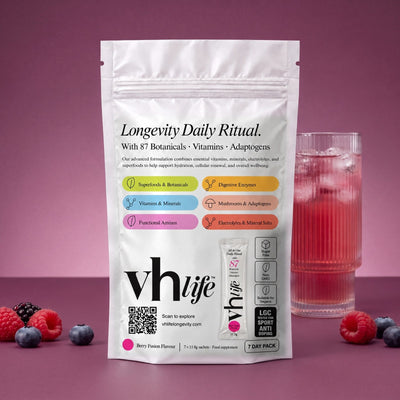
VH Life is a daily sachet with 26 vitamins and minerals plus botanicals, mushrooms, amino acids, enzymes and live cultures. The botanicals and other non-vitamin ingredients have no authorised health claim, so we make none. It suits adults who have decided they want one daily product instead of several, and who have checked it against what else they take.
It is not for you if you only need vitamin D, if you are pregnant, trying for a baby or breastfeeding, or if you need iron, omega-3 or protein: it contains none of those three, and it is not a meal replacement.
| Nutrient | Per sachet | %NRV | Authorised claim |
|---|---|---|---|
| Vitamin B12 | 250µg | Well above 15% of the NRV | Vitamin B12 contributes to the reduction of tiredness and fatigue |
| Folate | 400µg | 200% | Folate contributes to normal blood formation |
| Selenium | 70µg | 127% | Selenium contributes to the normal thyroid function |
| Zinc | 15mg | 150% | Zinc contributes to the normal function of the immune system |
That is above the NHS everyday suggestion of 10µg and under its 100µg adult limit, so if you already take vitamin D, add up the total. The sachet also has 1,000µg of biotin, which can interfere with some blood tests, so tell your GP or the lab before any test. It contains vitamin K, so if you take an anticoagulant or antiplatelet medicine, ask your doctor before use.
On subscription VH Life is £49.99 for 28 sachets every 4 weeks, which works out at £1.79 a day. There is also a 7-day trial (7 sachets, £12.99, one per customer) and one box of 14 sachets for £34.99. Free UK delivery. See the VH Life sachet and its full nutrition label.
Questions people also ask
Do I need a multivitamin if I eat healthy?
Usually not, the NHS says, apart from vitamin D in autumn and winter, which is hard to get from food. Check whether your diet really is varied: most UK adults fall short on fibre, fruit, vegetables and oily fish. A multivitamin cannot make up for those foods.
Do I need a multivitamin over 50?
Not automatically. The NHS notes vitamin B12 becomes harder to absorb with age, and women past the menopause and older men should keep vitamin A under 1.5mg a day from food and supplements. A GP can test for deficiencies. Men can also read our guide to multivitamins for men over 40.
Do I need a multivitamin if I take AG1?
Compare both labels nutrient by nutrient before taking them together. If both list the same vitamins or minerals, you are doubling up, and each total needs to stay under the NHS safe levels. Our guide on whether AG1 is worth it in the UK covers what it contains and costs.
Should I take a multivitamin with iron?
Only if you need iron. The NHS says men need 8.7mg a day, women aged 19 to 49 need 14.8mg, and women with heavy periods may need supplements. Taking 17mg or less a day in supplements is unlikely to cause harm. VH Life contains no iron.
Is a multivitamin enough vitamin D?
Only if its label gives at least 10µg (400 IU) per daily dose, the amount the NHS advises in autumn and winter. Do not add a separate vitamin D product without adding up the total. Our UK vitamin D guide explains how much is too much.
Sources
- NHS: Vitamins and minerals, accessed 21 October 2026.
- NHS: Eating a balanced diet, accessed 21 October 2026.
- NHS: The Eatwell Guide, accessed 21 October 2026.
- NHS: How to get more fibre into your diet, accessed 21 October 2026.
- NHS: Fish and shellfish, accessed 21 October 2026.
- NHS: The vegan diet, accessed 21 October 2026.
- NHS: Vitamin D, accessed 21 October 2026.
- NHS: B vitamins and folic acid, accessed 21 October 2026.
- NHS: Vitamin A, accessed 21 October 2026.
- NHS: Iron, accessed 21 October 2026.
- NHS: Vitamin B12 or folate deficiency anaemia, accessed 21 October 2026.
- GOV.UK: Great Britain nutrition and health claims (NHC) register, accessed 21 October 2026.
One sachet a day. Food supplements should not be used as a substitute for a varied and balanced diet and a healthy lifestyle. Not suitable for children, adolescents, or pregnant or breastfeeding women. VH Life is a food supplement, not a medicine. If symptoms persist, see your GP or pharmacist.