

Multivitamin vs greens powder vs all-in-one: which do you need?
If you eat a varied diet, you may need none of them, but they do different jobs. A multivitamin gives declared amounts of vitamins and minerals. A greens powder gives dried plant powders, often with few declared nutrient amounts. An all-in-one tries to combine both. None of them replaces vegetables or the NHS 5 A Day.
Are green powders better than multivitamins?
Neither is better in general. A multivitamin is built around set amounts of vitamins and minerals, each printed on the label with a %NRV (the share of the daily reference amount). A greens powder is built around dried plants such as grasses, algae, vegetables and fruit.
So ask what you are trying to cover. If you want a known amount of vitamin D in winter, a label with that number tells you. If you want more plants, the NHS answer is more fruit and vegetables. An all-in-one, the third format, puts vitamins, minerals and plant ingredients in one serving.
What does each format actually give you?
This describes typical products, so always read the label of the one in front of you.
| What you are comparing | Multivitamin (tablet, capsule or gummy) | Greens powder | All-in-one powder or sachet |
|---|---|---|---|
| What it typically provides | A spread of vitamins and minerals | Dried grasses, algae, vegetables and fruit, sometimes with fibre, enzymes or cultures | Vitamins and minerals plus plant ingredients in one serving |
| Are amounts declared? | Yes, each vitamin and mineral with an amount and %NRV | Varies. Plant ingredients are often listed inside a blend, sometimes with only a total weight | Varies. Vitamins and minerals usually have amounts; plant ingredients may not |
| Counts towards your 5 A Day? | No | Powders are not among the forms the NHS lists | Powders are not among the forms the NHS lists |
| Convenience | Swallow and go | Mix with water each day | Mix with water each day |
| Taste | None to speak of | Often earthy or grassy; flavoured versions vary | Usually flavoured; check the sweetener |
| Cost | Varies widely; compare the cost per serving | Varies widely; see our AG1 alternatives price comparison | Varies widely; see our supplement cost per day guide |
| Who it tends to suit | A simple base of known amounts | People who like a plant drink and already eat their 5 A Day | People who want one product instead of several |
Is greens powder a good substitute for vegetables?
No. The NHS advises at least 5 portions of a variety of fruit and vegetables a day, with a portion being 80g. It lists fresh, frozen, tinned, dried and juiced fruit and vegetables as counting. Powders and supplements are not on that list.
Whole fruit and vegetables also bring fibre. The NHS says the guideline is 30g of fibre a day and most adults eat about 20g. Check the fibre figure on any powder before you count on it.
Variety matters too: the NHS says different fruits and vegetables contain different combinations of nutrients. A powder is one fixed mix.
Do I need a multivitamin if I eat healthy?
Often not. The NHS says most people should get all the nutrients they need from a varied and balanced diet, although some people may need extra supplements.
Vitamin D is the exception. The NHS advises everyone to consider a daily 10 microgram supplement in autumn and winter, when the sun is too weak to make enough.
Iron is the other gap to know about. The NHS says women with heavy periods are at higher risk of iron deficiency anaemia and may need iron supplements, which is a conversation for a GP. For a fuller answer, read do I need a multivitamin?
Which is simpler: a powder or a cupboard of pills?
Whichever one you will still be taking in three months.
- Convenience: a pill routine can mean several products and several reorder dates. A daily drink is one step: tear, pour, stir.
- Taste and habit: a drink you enjoy is one you come back to, while capsules are easy to forget. If you dislike flavoured drinks first thing, tablets may suit you better.
- Cost and clutter: separate products add up in money and shelf space. One product is only better value if you would have bought most of what is in it.
- The label: look for a number next to each ingredient you care about, not just a blend total. Our guide to how to read a supplement label walks through it.
Where does VH Life fit?
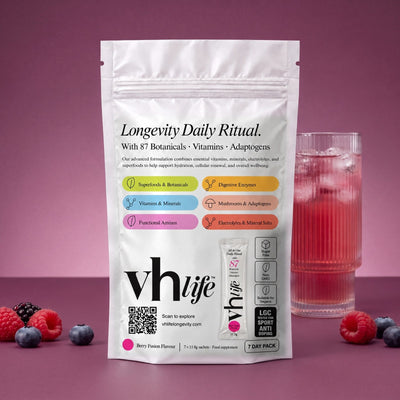
VH Life is an all-in-one, not a greens powder and not a tablet. It is one 11.8g berry sachet a day, stirred into 250 to 500ml of cold water, with 87 active ingredients grouped into six complexes. Its 26 vitamins and minerals have declared amounts. Its greens, herbs, mushrooms, amino acids, enzymes and live cultures are named on the box without individual amounts. No authorised health claim exists for those, so we make none.
Three examples, each above 15% of the NRV in one sachet:
- Vitamin C 900mg (1,125% NRV). Vitamin C contributes to the reduction of tiredness and fatigue.
- Zinc 15mg (150% NRV). Zinc contributes to the normal function of the immune system.
- Folate 400µg (200% NRV). Folate contributes to normal psychological function.
It suits someone who would otherwise buy a multivitamin and a greens powder. It is not for you if you want the cheapest multivitamin, if a GP has told you that you need iron (VH Life has none), or if you want omega-3, protein or collagen, which it does not contain. It is not a meal replacement.
On subscription VH Life is £49.99 for 28 sachets every 4 weeks, which works out at £1.79 a day. There is also a 7-day trial (7 sachets, £12.99, one per customer) and one box of 14 sachets for £34.99, with free UK delivery. Pause or cancel any time from your account. See the full label on the VH Life Berry product page.
Questions people also ask
Do I need a multivitamin if I take AG1?
Check both labels. If your greens powder already lists vitamins and minerals with amounts, a multivitamin can double some of them. Add up the totals, especially vitamin A, vitamin D and zinc. Our is AG1 worth it in the UK page covers the product itself.
Do greens powders count as one of your 5 A Day?
The NHS lists fresh, frozen, tinned, dried and juiced fruit and vegetables as counting towards your 5 A Day. Powders and supplements are not on that list, so it is safest not to count them.
Is a multivitamin as good as individual vitamins?
It depends on why you are taking it. If a GP finds a specific shortfall, such as iron or vitamin B12, follow their advice on the dose, which a general multivitamin may not match. If you just want a broad base of known amounts, a multivitamin or all-in-one covers more ground in one product.
Can I take a multivitamin and a greens powder together?
You can, but add up what you are getting. The NHS advises adults not to take more than 100µg of vitamin D a day, not more than 25mg of zinc from supplements unless a doctor advises it, and to keep vitamin A from food and supplements to 1.5mg a day or less.
Which format is cheapest?
Compare the cost per serving on each label rather than the pack price, because prices vary widely by format and brand. On subscription VH Life is £49.99 for 28 sachets every 4 weeks, which works out at £1.79 a day. Our supplement cost per day guide compares formats.
Sources
- NHS: Why 5 A Day?, accessed 21 October 2026.
- NHS: 5 A Day: what counts?, accessed 21 October 2026.
- NHS: How to get more fibre into your diet, accessed 21 October 2026.
- NHS: Vitamins and minerals, accessed 21 October 2026.
- NHS: Vitamin D, accessed 21 October 2026.
- NHS: Iron, accessed 21 October 2026.
- NHS: Others (zinc and other minerals), accessed 21 October 2026.
- NHS: Vitamin A, accessed 21 October 2026.
- GOV.UK: Great Britain nutrition and health claims (NHC) register, accessed 21 October 2026.
Food supplements should not be used as a substitute for a varied and balanced diet and a healthy lifestyle. One sachet a day. Not suitable for children, adolescents, or pregnant or breastfeeding women. VH Life is a food supplement, not a medicine. If symptoms persist, see your GP or pharmacist.