

How many supplements should I take a day?
There is no right number. The NHS says most people can get the nutrients they need from a varied, balanced diet, so many adults need only vitamin D in autumn and winter. Some groups need more, such as folic acid when trying for a baby. What matters is the total of each nutrient across everything you take.
Which supplements does the NHS actually recommend?
Only a short list. The NHS starting point is that most people get the vitamins and minerals they need from a varied and balanced diet.
| Who | What the NHS advises |
|---|---|
| Everyone, in autumn and winter | Consider 10µg of vitamin D a day |
| People rarely outdoors, in care homes, who cover most of their skin, or with dark skin | 10µg of vitamin D a day all year |
| Women who are pregnant, trying for a baby or could get pregnant | 400µg of folic acid a day until 12 weeks pregnant |
| Vegans | Vitamin B12, and fortified foods or supplements for vitamin D, iodine, selenium and calcium |
| Women with heavy periods | May need iron supplements; see a GP |
| Anyone with a diagnosed deficiency | Whatever the GP prescribes, at the dose they advise |
So a healthy adult who eats well might need one supplement in winter and none in summer. The number follows your situation, not a target.
Can you take too many supplements?
Yes. More is not better, and the NHS gives a safe level for most vitamins and minerals. These are the easiest to go over by stacking products:
- Vitamin A. Women past the menopause and older men should avoid more than 1.5mg (1,500µg) a day from food and supplements combined. If you eat liver every week, do not take supplements containing vitamin A.
- Vitamin B6. Do not take more than 10mg a day in supplements unless a doctor advises it.
- Vitamin D. Adults should not take more than 100µg (4,000 IU) a day.
- Iron. 17mg or less a day in supplements is unlikely to cause harm, unless a GP advises more.
- Vitamin C. More than 1,000mg a day can cause stomach pain and diarrhoea.
- Zinc. Do not take more than 25mg a day in supplements unless a doctor advises it.
- Folic acid. Doses above 1mg can mask the signs of vitamin B12 deficiency.
- Biotin. 0.9mg (900µg) or less a day in supplements is unlikely to cause harm.
How do I add up the totals from several products?
Write every product down, then add up one nutrient at a time.
- List everything you take daily, including gummies, sports drinks and fortified shakes.
- Find the amount per daily dose on each label, not per tablet or scoop.
- Put everything in the same unit. 1mg is 1,000µg. For vitamin D, 1µg is 40 IU.
- Add the totals for each nutrient and compare them with the NHS levels above.
- Watch for the common overlaps: vitamin D in both a multivitamin and a spray, biotin in both a multivitamin and a hair gummy, zinc in both a multivitamin and lozenges.
Our guide to reading a supplement label explains %NRV.
Is one combined product better than several?
Neither is better in itself.
- One combined product means fewer things to track and less chance of doubling up, but you cannot change one dose on its own.
- Several single products let you take exactly what you need, such as only vitamin D in winter, but the totals get harder to track.
Compare multivitamins and greens powders to see how the formats differ, and what supplements cost per day in the UK before you decide.
Where does VH Life fit?
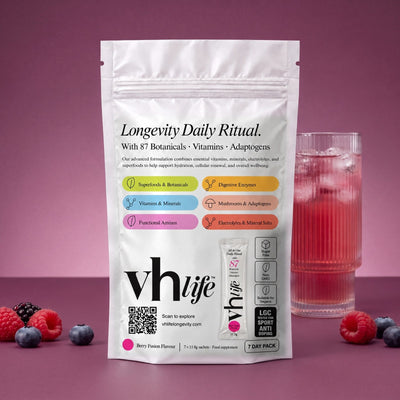
VH Life is a single daily sachet with 26 vitamins and minerals, so it is meant to be your only vitamin and mineral product, not one more on top of a stack. Here is how one sachet sits against the NHS levels.
| Nutrient | One sachet | NHS level | What it means if you take something else |
|---|---|---|---|
| Vitamin D | 62.5µg (2,500 IU) | No more than 100µg | Do not add another vitamin D product unless a doctor advises it |
| Biotin | 1,000µg (1mg) | 0.9mg or less unlikely to cause harm | Already above that level. Do not add a biotin or hair supplement |
| Vitamin C | 900mg | Less than 1,000mg | Do not add another vitamin C supplement |
| Zinc | 15mg | No more than 25mg | Check zinc in any lozenges or other products |
| Vitamin A | 900µg | 1,500µg from food and supplements (after menopause, older men) | Avoid other vitamin A supplements, and fish liver oil |
| Manganese | 3mg | 4mg or less; 0.5mg or less for older people | Above the level for older people, who should ask a pharmacist first |
| Iron | None | 17mg or less | Take iron separately only if a GP advises it |
The 62.5µg is above the NHS everyday suggestion of 10µg and under its 100µg adult limit; our UK vitamin D guide has the detail.
The overlap warning is simple: do not double up vitamin D or biotin. Biotin at 1,000µg can also interfere with some blood tests, so tell your GP or the lab before any test. The sachet contains vitamin K (30µg), so if you take an anticoagulant or antiplatelet medicine, ask your doctor before use.
A sachet provides 15mg of zinc (150% NRV). Zinc contributes to the normal function of the immune system. It provides 1,000µg of biotin (2,000% NRV). Biotin contributes to the maintenance of normal hair. Its botanicals, mushrooms, amino acids and enzymes have no authorised health claim, so we make none.
On subscription VH Life is £49.99 for 28 sachets every 4 weeks, which works out at £1.79 a day. There is also a 7-day trial (7 sachets, £12.99, one per customer) and one box of 14 sachets for £34.99. Free UK delivery. Check the full VH Life nutrition label against what you already take.
Questions people also ask
How many vitamins should I take a day?
Most adults eating a varied, balanced diet need only vitamin D, 10µg a day in autumn and winter, according to the NHS. Others need specific extras, such as folic acid before pregnancy or B12 if vegan. There is no benefit in taking more products for the sake of it.
Can zinc and magnesium be taken together?
The NHS sets no rule against taking them together. Keep zinc supplements to no more than 25mg a day and magnesium supplements to 400mg or less, which the NHS says is unlikely to cause harm. Ask a pharmacist if you take prescribed medicines.
Is it okay to take supplements all at once?
The NHS gives no general rule, so follow each label. If you take any prescribed medicine, ask a pharmacist to check for interactions first. If a GP has prescribed iron, follow their instructions; the NHS suggests taking iron tablets with or soon after food to reduce side effects.
Should I take a multivitamin with food?
Follow each product's label, as the NHS gives no general rule for multivitamins. VH Life is one sachet stirred into 250 to 500ml of cold water, once a day, at whatever time suits you.
Do I need a multivitamin if I take other supplements?
Not necessarily. Add up what you already take first, because a multivitamin on top of single vitamins is the most common way to double up. Our guide to whether you need a multivitamin covers who is most likely to benefit.
How do I know which supplements I need?
Start with the NHS groups: vitamin D for everyone in winter, folic acid before pregnancy, B12 for vegans. If you have symptoms such as ongoing tiredness, see a GP for a blood test rather than guessing which supplement to take.
Sources
- NHS: Vitamins and minerals, accessed 21 October 2026.
- NHS: Vitamin D, accessed 21 October 2026.
- NHS: Vitamin A, accessed 21 October 2026.
- NHS: B vitamins and folic acid, accessed 21 October 2026.
- NHS: Vitamin C, accessed 21 October 2026.
- NHS: Iron, accessed 21 October 2026.
- NHS: Other vitamins and minerals, accessed 21 October 2026.
- NHS: Iron deficiency anaemia, accessed 21 October 2026.
- NHS: The vegan diet, accessed 21 October 2026.
- GOV.UK: Great Britain nutrition and health claims (NHC) register, accessed 21 October 2026.
One sachet a day. Food supplements should not be used as a substitute for a varied and balanced diet and a healthy lifestyle. Not suitable for children, adolescents, or pregnant or breastfeeding women. VH Life is a food supplement, not a medicine. If symptoms persist, see your GP or pharmacist.